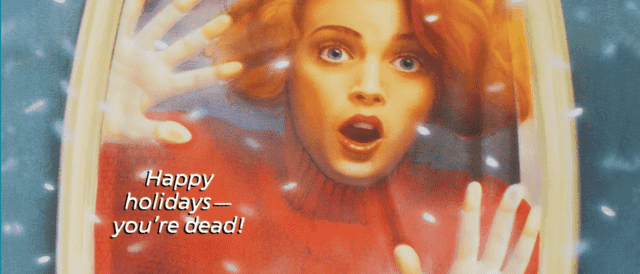
Creepers attempted to ride the coattails of Goosebumps’ success in the late ’90s. Kicking off in 1997 with its first book and wrapping up in 1999, the franchise packed four short series into just two years. Each series had six titles, adding up to a creepy little library of 24 books.
The series was originally named Shivers, with at least 6 books destined to hold the name. Yet, this was most likely stopped because there was another YA horror series written by M. D. Spenser with this name. It is not clear who came up with the name first, as both of the first books from these series were published in 1997.
Despite its short life, the series sold over 5 million copies worldwide. That number might seem huge, but it’s just a fraction compared to Goosebumps, which by 2022 had sold over 400 million. Still, like many Goosebumps imitators, Creepers carved out its own space. For readers who grew up in the ’90s, revisiting the series offers an intriguing glimpse into the wider landscape of children’s horror at the time.

Authors
The entire series is attributed to the pen name of Edgar. J. Hyde (obviously a reference to author Edgar Allen Poe and the story The Strange Case of Dr Jekyll and Mr Hyde (1887)). Edgar J. Hyde, however, is a collection of writers. In each novel at the back of the book, you can read the following:
This series was conceived by Edgar J Hyde and much of the text was provided by his minions under the slavish conditions and pain of death! Thankfully none of the minions defied their master and so we can say ‘thank you’ to thm for toughing it out and making this series possible.
Edgar J. Hyde, 1998
In reality, the main contributors to the series are Joan Love, Alan J. Henderson (who was also a Company Director of the original company that published the books), Simon Bedding, and Joseph Boyle. Using ghostwriters had been done before, for example, the Ghosts of Fear Street series.
Creepers Books in Order of Year of Publication (with authors)
| Title | Year Published | Author |
|---|---|---|
| Payback Time | 1997 | Lesley Simpson |
| Rag & Bone Man | 1997 | Simon Bedding |
| Pen Pals | 1997 | Joan Love |
| Noisy Neighbours | 1997 | Alison Morris |
| Cold Kisser | 1997 | Edgar J Hyde (No text credit given) |
| Beggar Boy | 1998 | Alan J. Henderson |
| Ghost Writer | 1998 | Simon Bedding |
| Mirror Mirror | 1998 | Joan Love |
| The Piano | 1998 | Joan Love |
| The Scarecrow | 1998 | Joseph Boyle |
| The Wishing Well | 1998 | Althea Duff |
| Blood on Tap | 1998 | Alan J. Henderson |
| Doctor Death | 1998 | Joan Love |
| Edgar Escapes | 1998 | Alan J. Henderson |
| The Ghostly Soldier | 1998 | Joseph Boyle |
| Happy Halloween | 1998 | Simon Bedding |
| Soul Harvest | 1998 | Joan Love |
| The Sold Souls | 1999 | Alan J. Henderson |
| The Rocking Chair | 1999 | Joseph Boyle |
| Stage Fright | 1999 | Joan Love |
| The Entertainer | 1999 | Alan J. Henderson |
| The Hooded Hangman | 1999 | Simon Bedding |
| The Golden Goblet | 1999 | Mhairi McDiarmid |
| The Gravedigger | 1999 | Jimmy Docherty |
The Drawbacks of Ghostwriting
Ghostwriting enables publishers to produce books quicker than waiting for a single author to complete works, while maintaining a consistent brand identity. It also provides a chance for writers to contribute who may not necessarily need individual recognition. While some authors may choose to do this, I strongly believe that they should have their work credited to them.
With that said, the after-effects of such a practice feel unfair to the writers. In my research, I found errors in digital editions (published by Park Reads)—like misspelled names of the real authors—which suggests their contributions weren’t valued, and a lack of care.
Wouldn’t you be annoyed if you wrote a book, and the publisher misspelled your name?! I know for a fact that Edgar J. Hyde would certainly not stand for it. More on him in the next section!

But who is Edgar J. Hyde?
We learn about who Edgar Hyde is from Creepers: Edgar Escapes. Edgar Joshua Hyde was born on October 31st, 1396, the son of a British tutor. Following his untimely death, his spirit is said to have persuaded a man named Hugo to act as his muse, recording and publishing his tales for the mortal world.
These became the Creepers books — stories aimed at drawing children into horror and encouraging darker thoughts. Behind them lies Edgar’s greater purpose: finding a way back to the mortal realm, with revenge at the heart of his plan.
Edgar lives in a universe where magic and spellcraft exist, and this is also our world. These themes of fantasy, witchcraft, and the supernatural persist through the series.
Themes and Set up
The series mainly uses supernatural and dark fantasy themes. Whilst the books are not meant to be too scary for kids, they do mention more adult themes, such as torture chambers. The majority of the books feature teens as the main characters, who end up in spooky situations.
Despite older teen protagonists, the books themselves are aimed at a slightly younger audience of 7 to 12-year-olds. Chapter numbers vary from book to book, but the page length ranges from approximately 120 to 130 pages.
Creepers Today and Tomorrow
I still remember fondly being bought and reading these as a kid. The prospect of more Creepers books on the horizon therefore, is exciting. One of the Creepers’ websites promised new books for 2024 [accessed: 24th of August 2025], but these did not materialise. This expected release has now been pushed to 2026 on their second website [accessed: 24th of August 2025].
For the time being, you can also listen to Creepers on audiobook! Some of the stories were made into audiobook versions, with small amendments made. You can listen to these on both Spotify and Audible.